
Sustainability · 2025
In this section50 topics
- Sustainability Policy & Goals — Overview1 item
- Sustainability Policy2 items
- Sustainability Goals & UN SDGs3 items
- Policy Review2 items
- Business Value Chain1 item
- Stakeholder Analysis2 items
- Environmental Policy & Guidelines3 items
- Environmental Policy Review1 item
- Energy — Plan & Guidelines2 items
- Energy — Electricity Consumption1 item
- Energy — Fuel Consumption1 item
- Energy — Targets2 items
- Energy — Performance & Outcomes2 items
- Water — Plan & Guidelines2 items
- Water — Withdrawal, Discharge & Consumption1 item
- Water — Targets2 items
- Water — Performance & Outcomes2 items
- Waste — Plan & Guidelines2 items
- Waste — Generation, Disposal & Recycling1 item
- Waste — Targets2 items
- Waste — Performance & Outcomes2 items
- GHG — Plan & Guidelines2 items
- GHG — Emissions1 item
- GHG — Emissions Verification1 item
- GHG — Targets1 item
- GHG Targets — Net Zero1 item
- GHG Targets — Carbon Neutrality1 item
- GHG — Performance & Outcomes2 items
- Environmental Legal Incidents1 item
- Social Policy & Guidelines4 items
- Social Policy Review1 item
- Social — Principles & Standards Practised1 item
- Human Rights Due Diligence2 items
- Employees — Plan & Guidelines3 items
- Employees — Workforce1 item
- Employees — Remuneration & Provident Fund1 item
- Employees — Training & Development1 item
- Employees — Occupational Health & Safety1 item
- Employees — Labour Relations1 item
- Employees — Employee Representation2 items
- Employees — Targets2 items
- Employees — Performance & Outcomes2 items
- Customers — Plan & Guidelines3 items
- Customers — Satisfaction Results1 item
- Customers — Targets2 items
- Customers — Performance & Outcomes2 items
- Community & Social — Plan & Guidelines3 items
- Community & Social — Targets2 items
- Community & Social — Performance & Outcomes2 items
- Law Violation Incidents1 item
Sustainability Policy & Goals — Overview
Introduction
The Company recognizes that achieving and maintaining its vision and mission sustainably requires a commitment to conducting business that responds to stakeholders, coupled with reducing impacts on the economy, society, and environment, under the concept of “Sustainability in Action” which reflects the concrete implementation of sustainability, covering environmental, social, and economic aspects, for the organization's sustainable growth and responsibility towards society, the environment, good corporate governance, and human rights.
Furthermore, the Company emphasizes supporting the United Nations Sustainable Development Goals (SDGs) by integrating Environment, Social, and Governance (ESG) approaches as core principles in its business operations. It has also established a sustainability management structure through the Board of Directors, the Good Corporate Governance and Sustainability Committee, and relevant working groups to continuously and effectively drive sustainability strategies and create value for the business, stakeholders, society, environment, and the nation in the long term.
The Company's approach to corporate sustainability operations is as follows:
Aims to create results through business processes.
Conducts business sustainably according to its core mission, adhering to principles of good corporate governance, transparency, and responsibility towards all stakeholder groups throughout the value chain, aiming to create economic, social, and environmental value.
Aims to develop excellent products and services.
Develops smart technology products and services, aims to provide valuable experiences to customers, promotes access to services in the digital society, and prioritizes personal data protection and cybersecurity.
Aims to conduct business responsibly.
Promotes stakeholders to conduct business sustainably, emphasizes anti-corruption, supports communities and society, and manages environmental impacts such as greenhouse gases, energy, water, and waste.
Promotes and supports personnel development.
Develops the potential and skills of personnel at all levels, supports innovation and equal growth opportunities to enhance international competitiveness.
Promotes respect for human rights and labor practices.
Respects human rights and strictly adheres to labor laws, provides appropriate opportunities and compensation, and ensures working environment, safety, health, and personal data protection.
Promote a culture of sustainable organizational development.
Fosters an organizational culture that emphasizes adaptability, mission, and participation through honest, ethical, and moral operations, risk management, and social and environmental responsibility.
Sustainability Governance Structure

The Company emphasizes the participation of all sectors within the organization in driving sustainability. Therefore, it assigns roles to the Board of Directors, management, and employees to collaborate in all dimensions, including environmental, social, and corporate governance, while fostering understanding and a strong organizational culture to truly support sustainable operations.
The Company believes that good corporate governance, together with a visionary and responsible board of directors and management, an efficient, transparent, and auditable management system, and a focus on all stakeholder groups, including continuous development, will be key factors in building credibility and sustainability for both the business and society.
Sustainability Governance Structure To support sustainability operations, the Company has the following:
Board of Directors
Is the highest authority in setting organizational policies and directions, and assigns sustainability tasks to the Good Corporate Governance and Sustainability Committee.
Good Corporate Governance and Sustainability Committee
Responsible for setting guidelines, monitoring, and evaluating sustainability performance, and continuously reporting to the Board of Directors.
Sustainable Organizational Development Working Group
Responsible for planning and driving sustainability initiatives by integrating economic, social, environmental, and governance dimensions across the organization. The committee monitors and evaluates performance, establishes key performance indicators, and reports progress. It also supports knowledge development, training, and innovation, as well as communicates performance outcomes to stakeholders to enhance credibility and promote a sustainable corporate image. The Chief Executive Officer serves as the Chairperson of the Sustainability Development Working Committee, overseeing the implementation of sustainability policies and monitoring the execution of sustainability-related plans.
Sustainability Policy
Has a Sustainability Policy
Yes
Policy Description
The Company prioritizes economic growth alongside responsible business operations, adhering to good corporate governance principles and considering economic, social, and environmental impacts at every stage of the value chain. It also aims to create shared value for all stakeholder groups under sustainable practices aligned with international standards and the United Nations Sustainable Development Goals (UN SDGs).
The Company operates with the goal of achieving stable growth and sustainable long-term returns in accordance with the organization's sustainability policy. It focuses on developing high-quality products and services through intelligent technologies that enhance customer experience and value, as well as carefully managing social and environmental impacts to avoid risks and mitigate potential effects throughout the value chain.
Furthermore, the Company remains committed to respecting human rights and labor standards, while promoting personnel development and fostering an organizational culture that supports sustainability, including adaptability, mission-driven work, and employee engagement, to ensure operations align with the rapidly changing business environment.
The Board of Directors, management, and employees at all levels will collectively drive the organization towards sustainable development, fostering confidence among stakeholders and supporting business growth alongside creating long-term benefits for society and the environment.
Environmental Dimension
The Company recognizes the importance of environmentally friendly business operations. The Company has developed work systems that prioritize efficient resource utilization, including measures to support energy conservation, reduce unnecessary resource consumption, and decrease greenhouse gas emissions, in order to prevent, control, and mitigate environmental impacts, both in terms of work processes and the selection of energy-efficient and environmentally friendly electronic equipment.
Social Dimension
The Company recognizes the importance of conducting business with social and community responsibility, alongside developing the potential of its personnel to create quality individuals who contribute to sustainable social development. This includes supporting employment and creating career opportunities, which are integral to income distribution and economic promotion within society.
The Company prioritizes respect for human rights and treats employees and stakeholders fairly and equally, without discrimination based on race, religion, gender, skin color, language, ethnicity, or any other status. Additionally, the Company provides various benefits and welfare to employees beyond legal requirements, and continuously promotes personnel development to enhance the knowledge, abilities, and skills necessary for employees at all levels to perform efficiently and align with organizational goals. The Company recognizes the importance of participating in social development, thus supporting Corporate Social Responsibility (CSR) activities, including the application of information technology and digital services to improve the quality of life for people in society, thereby creating social benefits and supporting sustainable development through the Company's project operations.
The Company’s business operations contribute to job creation for qualified and capable personnel, enabling employees to earn higher incomes. This allows them to support their daily living expenses for themselves and their families, thereby stimulating economic activities and contributing to the growth of Thailand’s economy. In addition, the Company provides training programs to prepare employees for the use of various computer applications prior to commencing work, and regularly conducts training sessions for its staff. These initiatives aim to ensure that employees remain up to date with information technology knowledge, stay informed of emerging technological trends, and are able to effectively apply such knowledge in both their daily lives and professional responsibilities.
Governance Dimension
The Company recognizes the importance of good corporate governance and conducting business ethically, respecting rights, and being responsible towards society, the environment, and various stakeholders. Having an efficient, transparent, and auditable management system, along with a strong emphasis on anti-corruption, will help build trust and confidence with all involved parties.
The Company prioritizes the rights of all stakeholder groups, whether internal stakeholders such as the Company's employees, or external stakeholders such as creditors and customers. The Company recognizes that support and feedback from all stakeholder groups are beneficial for the Company's operations and business development. Therefore, the Company will comply with relevant laws and regulations to ensure that the rights of these stakeholders are well protected. Furthermore, in its business operations, the Company considers the rights of all parties involved, following these guidelines:
Shareholders | : | The Company is committed to fostering growth to ensure good returns for shareholders, as well as respecting shareholders' rights to information. It will disclose information for evaluating the Company's management and accurate financial performance and position. The Company has a policy of accurate accounting records in accordance with accounting standards and relevant laws, subject to review by internal auditors, the audit committee, and the Company's independent auditors. |
Employees | : | The Company recognizes that employees are a key resource vital for the organization's growth. The Company will ensure a safe working environment for employees' lives, as well as the safety of the Company's and employees' assets. The Company will strictly comply with all laws and regulations related to employees, including appointments, transfers, rewards, and disciplinary actions, which will be conducted with equality, integrity, and fairness. Furthermore, the Company will promote comprehensive and continuous development of employees' knowledge and abilities, and provide appropriate and fair compensation to employees as a reward and incentive for their dedication and commitment to work, enabling them to achieve established business goals. |
Customers | : | The Company is committed to building customer satisfaction and confidence, showing care and responsibility towards customers. Customers must receive good quality products/services at appropriate prices, and the Company will strictly adhere to terms and agreements with customers, maintaining good and sustainable relationships with them, and not using customer information for the benefit of the Company or related parties. |
Business Partners | : | The Company is well aware of the importance of its business partners in supporting and driving the smooth operation of its business. Therefore, the Company is committed to developing and maintaining sustainable relationships with its partners, and the Company has no policy allowing directors and employees to receive any personal benefits from business partners. Furthermore, the Company intends to provide goods and services in a standardized and ethical manner, under the following principles:
Establish a system for managing and monitoring contract compliance to ensure adherence to terms. |
Competitors | : | The Company will treat trade competitors within the framework of honest and fair competition under the law, and will not seek confidential information of trade competitors through dishonest or inappropriate means, nor will it make malicious accusations against trade competitors without factual basis. |
Creditors | : | The Company will uphold its commitments and strictly adhere to the terms and conditions of contracts and its obligations to creditors, including business creditors and financial institutions. It will not use dishonest methods to conceal information or facts that could cause damage to creditors. The Company will treat creditors fairly, including timely repayment and the management of collateral, and will notify creditors in advance if it is unable to fulfill contractual obligations, working together to find solutions to such problems. |
Government Sector | : | Prioritizes transparency and considers integrity in transactions with government officials or agencies to avoid actions that may lead to impropriety or conflict with good governance principles. |
Society Community and Environment | : | The Company prioritizes society, community, and the environment, and will comply with applicable environmental laws and regulations. The Company will promote environmental awareness and responsibility among employees, and will exchange knowledge and experience with individuals and other organizations to continuously and consistently ensure an appropriate working environment and operations, while respecting local customs and cultures. The Company has continuously planned and implemented projects to give back to Thai society up to the present. |
Fair Business Practices
The Company places great importance on conducting its business in compliance with fair and lawful competition, in accordance with applicable laws and the Company’s business ethics. It adheres to fair competition principles on an equitable basis, ensuring mutual benefits for all parties. Business dealings with partners must not damage the Company’s reputation or violate any laws, including intellectual property rights.
The Company also promotes the efficient use of its resources and assets by executives and employees, ensuring the use of properly licensed products and services and refraining from supporting any products or activities that infringe intellectual property rights. As the Company operates in the information and communications technology sector, it is essential to strictly comply with contractual terms and conditions and to respect intellectual property rights without compromising fair competition.
The Company has established policies and measures for Anti-Money Laundering (AML) and Counter-Terrorism Financing (CTF) to provide guidelines for monitoring and preventing the use, or intended use, of the Company’s products or services in activities related to money laundering or terrorism financing. These policies also set minimum standards for all employees when implementing processes or control measures, in compliance with the regulations of the Anti-Money Laundering Office (AMLO).
Non-compliance with the AML and CTF policies may result in civil and criminal liabilities or other legal consequences for the Company and its employees, as well as reputational damage. Key measures include Know Your Customer (KYC), Customer Due Diligence (CDD), risk management related to money laundering and terrorism financing, proper record-keeping in accordance with legal requirements, and reporting transactions to the Anti-Money Laundering Office (AMLO).
Such stringent measures also enable relevant authorities to promptly refuse or terminate transactions involving individuals suspected of engaging in predicate offenses, money laundering, or terrorism financing. They further support the timely detection and tracking of fraudulent activities through efficient monitoring systems, thereby strengthening financial crime prevention frameworks, reducing opportunities for misconduct, and minimizing the risk of financial institutions being used as channels for illicit activities.
Sustainability Goals & UN SDGs
Has Sustainability Goals
Yes
Goals Description
The Company is committed to conducting business based on sustainable development principles, alongside creating shared value for stakeholders in all sectors. This is achieved by setting environmental, social, and good corporate governance goals to enhance stable business growth, create positive outcomes for society and the environment, and foster sustainable trust and confidence from stakeholders.
Sustainable Development Goals and Performance
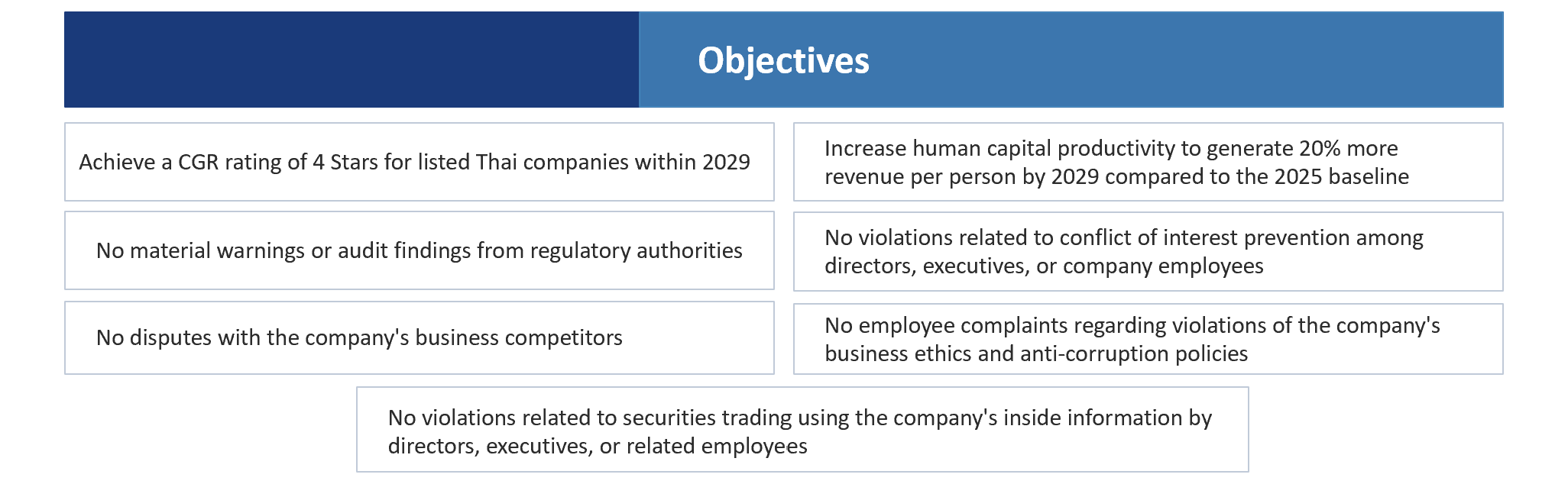
Economic and Governance Dimension
The Company aims to drive business growth alongside creating sustainable value by adhering to ESG (Environmental, Social, Governance) investment principles to support the transition to becoming an international standard digital service provider. With technical expertise and an understanding of the business context in each area, the Company selects and develops solutions appropriate for the diverse needs of customers of all organizational sizes.
This approach helps enhance customer experience and satisfaction, while continuously strengthening close collaboration with trading partners and business allies. It also addresses sustainability issues in the economic and governance dimensions, which include business innovation development, customer relationship management, maintaining business ethics and anti-corruption, data and information system security, as well as procurement and building a sustainable business partner network.
Social Dimension
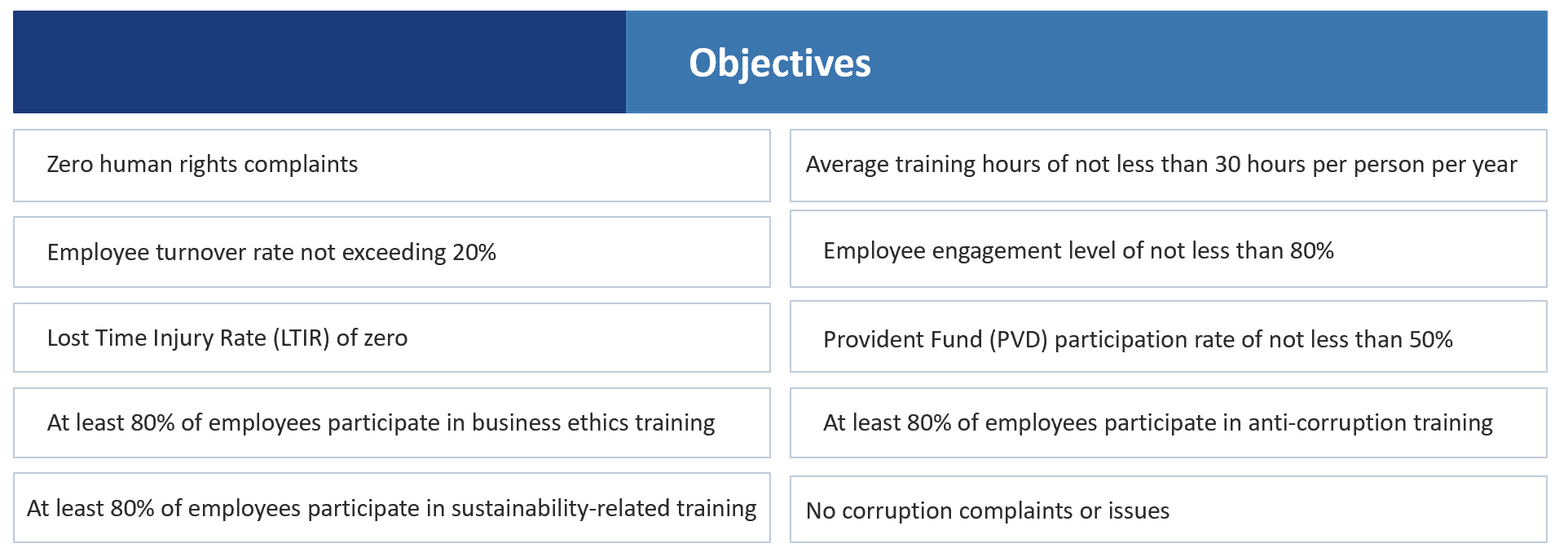
The Company aims to enhance organizational value through operations that consider social responsibility, by prioritizing the creation of a work environment conducive to development, including training, continuous learning, and supporting career advancement paths, while ensuring appropriate compensation and welfare. The Company also promotes fair work practices, the participation of diverse personnel, and access to products and services that consistently meet evolving needs.
Concurrently, the Company emphasizes community engagement, which is a crucial foundation for sustainable development in the social dimension. This covers key issues such as enhancing employee potential, promoting well-being and safety at work, respecting human rights and fair labor practices, as well as responsibility for products and services offered to consumers.
Environmental Dimension
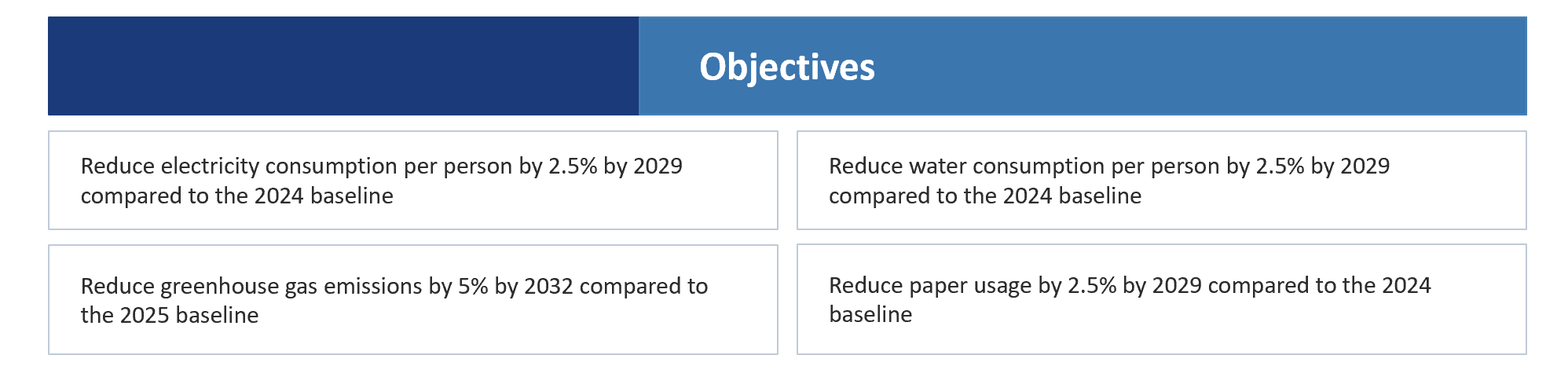
The Company aims to create value through business operations that consider environmental impacts, by prioritizing efficient resource utilization, reducing negative impacts on ecosystems, and promoting collaboration in natural resource conservation, both within the organization and with external agencies. Furthermore, the Company operates strictly within environmental legal frameworks, while driving sustainability issues in the environmental dimension, which include efficient resource use and appropriate greenhouse gas emission management.
UN Sustainable Development Goals
| SDG Goal |
|---|
| Goal 1 No Poverty |
| Goal 3 Good Health and Well-being |
| Goal 4 Quality Education |
| Goal 5 Gender Equality |
| Goal 7 Affordable and Clean Energy |
| Goal 8 Decent Work and Economic Growth |
| Goal 9 Industry, Innovation and Infrastructure |
| Goal 10 Reduce Inequalities |
| Goal 13 Climate Action |
| Goal 16 Peace, Justice and Strong Institutions |
| Goal 17 Partnerships for the Goals |
Policy Review
Policy Reviewed This Year
Yes
Policy Changed This Year
No
Business Value Chain
Value Chain Description
The Company prioritizes the development and management of its business value chain from upstream to downstream, considering all stakeholder groups. The business value chain covers 5 main activities: 1) Sales and services that are diverse and suitable for the needs of each customer. 2) Procurement of products and equipment to ensure quality goods and services and that partners adhere to sustainability guidelines. 3) Efficient and standard-compliant storage and delivery of goods. 4) Systematic project management and operations to create valuable customer experiences. And 5) After-sales services to build satisfaction and loyalty. Operations at every step help the Company achieve continuous long-term growth, while improving the quality of life for people in society and promoting appropriate and sustainable resource utilization.
|
Core Activities |
Details |
|
|
|
|
|
|
|
|
|
|
Support Activities
-
Personnel Development
The Company continuously provides training and develops both technical and behavioral skills, as well as supports employees in obtaining international certifications to enhance their potential and work quality.
-
Research and Development of Innovation
New technologies are studied and tested, and solutions and services are developed to meet customer needs and align with future business trends. -
Quality Management
The Company establishes clear operational standards and monitors and controls quality at every stage to ensure that work and services are delivered in accordance with international standards. -
Partner and Supplier Relationship Management
The Company aims to build sustainable collaborations with partners and distributors to enhance competitiveness and reduce the risk of relying on a single source of distribution. -
Financial Management and Governance
Manage project budgets prudently, transparently, and in accordance with good corporate governance principles, as well as strictly comply with relevant laws and regulations.
Stakeholder Analysis
Introduction
The Company recognizes the importance of all stakeholder groups, both direct and indirect. It has considered and analyzed stakeholders within the business value chain, based on the potential impacts of the Company's operations on each stakeholder group, as well as their expectations and needs from the Company. This enables the establishment of appropriate and comprehensive operational guidelines and responses. The Company has categorized stakeholders in the business value chain into 9 groups, namely:
Stakeholder Analysis
| Stakeholder Type | Stakeholders | Stakeholder Expectations | Response to Expectations | Communication Activities |
|---|---|---|---|---|
| Internal stakeholders | 2921 · Description: Employees | • Receive appropriate and fair compensation, welfare, and benefits. • Have a good, safe, and supportive working environment. • Receive opportunities for career advancement and professional development. | • Establish appropriate and competitive compensation and benefits compared to businesses in the same industry. • Conduct employee evaluations 1–2 times per year, with opportunities for discussion with supervisors to receive feedback and improve areas requiring development. • Create a safe working environment that supports efficient work performance. • Continuously provide training and development for personnel skills, encompassing both professional (Technical Skills) and general (Soft Skills) competencies. • Conduct business with environmental, social, and economic responsibility, and corporate governance (ESG) in accordance with sustainable development guidelines. | 2941 · Description: Online Communication · 2945 · Description: Complaint Reception · 2946 · Description: Employee Engagement Survey · 2947 · Description: Satisfaction Survey · 2948 · Description: Training / Seminar |
| External stakeholders | 2913 · Description: Shareholders | • Receive appropriate and continuous returns, along with growth and value creation for the company • Good corporate governance that is transparent, auditable, and has effective risk management and internal control systems • Stable and sustainable business operations in accordance with ESG principles, covering environmental, social, and governance aspects • Disclosure of accurate, complete, timely, and transparent information | • Oversee business operations transparently, fairly, and verifiably. • Pay dividends appropriately in accordance with the company's policy. • Manage the business for sustainable growth and reduce operational risks. • Organize activities such as meetings with analysts and investors, and press conferences regarding the company's performance. • Disclose material information to shareholders and the stock exchange regularly, accurately, and equally. • Provide contact channels for investor relations, company secretary, and whistleblowing to promote transparency. | 2938 · Description: Visit · 2939 · Description: Press Release · 2941 · Description: Online Communication · 2944 · Description: Annual General Meeting (AGM) |
| External stakeholders | 2923 · Description: Customers | • Create satisfaction with quality products and services at reasonable prices. • Prompt and efficient problem resolution. • Maintain the confidentiality and privacy of customer data. • Conduct business with ethics and responsibility. • Diverse products that can meet various needs. | • Listen to customer feedback and complaints, and systematically and promptly analyze and resolve issues. • Develop personnel, service quality, and technology to support future needs. • Operate in accordance with international standards for safety, good corporate governance, and anti-corruption. • Develop quality products and innovative services to continuously meet customer needs. • Establish data protection and privacy standards, and regularly conduct satisfaction surveys and customer relationship building activities. | 2941 · Description: Online Communication · 2945 · Description: Complaint Reception · 2947 · Description: Satisfaction Survey |
| External stakeholders | 2900 · Description: Business partners | • Adhere to fair terms, conditions, and obligations. • Develop service innovations and address limitations in the use of systems and equipment to ensure safe and modern service delivery. • Manage operations to maximize benefits and profitability. | • Comply with trade terms and fulfill contractual obligations to business partners fairly. • Adhere to ethical conduct in business operations. • Improve work processes and innovation in service areas. • Review and exchange opinions for co-creating value. • Analyze and review prices regularly according to economic conditions. | 2938 · Description: Visit · 2941 · Description: Online Communication · 2947 · Description: Satisfaction Survey |
| External stakeholders | 2899 · Description: Suppliers | • Compliance with the company's procurement regulations and requirements • Conduct business together transparently, fairly, and equally • Maintain confidentiality of partner information | Improve the efficiency of procurement-related processes Maintain the confidentiality of partner information Establish a partner code of conduct to promote social and environmental cooperation and adhere strictly to it Conduct business with environmental, social, and economic responsibility and corporate governance (ESG) in accordance with sustainable development guidelines | 2938 · Description: Visit · 2941 · Description: Online Communication · 2945 · Description: Complaint Reception · 2948 · Description: Training / Seminar |
| External stakeholders | 2894 · Description: Creditor | • Company's credibility and financial stability • Past performance and future growth potential • Ability to repay debts and comply with trade terms on time | Disclose information required to be reported according to the accounting period (Periodic Reports), such as quarterly and annual financial statements. Strictly comply with the terms and conditions of the contract or various conditions as agreed upon. Payment of principal, interest, and management of various collaterals under the relevant contracts. Maintain the trust of creditors. | 2941 · Description: Online Communication · 2945 · Description: Complaint Reception |
| External stakeholders | 2898 · Description: Competitors | • Conduct business with transparency and fair competition | • Regularly monitor competitors' performance. • Treat business competitors fairly and ethically within the legal framework of competition. • Do not seek confidential information from business competitors through unethical means. | 2941 · Description: Online Communication · 2949 · Other name: Comply with legal requirements related to fair competition. · Description: Others |
| External stakeholders | 2902 · Description: Community · 2928 · Description: Society | Improve quality of life and create benefits for communities and society • Operate safely without causing adverse impacts on communities • Support for social and community activities • Environmental conservation and reduction of greenhouse gas emissions | Operate in accordance with occupational safety and health guidelines • Enhance resource efficiency and reduce the impact of greenhouse gas emissions • Promote employment and create career opportunities for communities, including the employment of persons with disabilities • Promote the application of information technology in economic and social development • Support economic and social development through information technology | 2940 · Description: Social Event · 2941 · Description: Online Communication · 2945 · Description: Complaint Reception |
| External stakeholders | 2931 · Description: Government agencies and Regulators | Adhere to all applicable laws and regulations. Adhere to good corporate governance policies and business ethics. | Strictly comply with relevant laws and regulations. Provide accurate and timely information. Implement corporate governance policies and business ethics within the organization, and disseminate these policies through annual reports and the company's website. | 2938 · Description: Visit · 2941 · Description: Online Communication · 2945 · Description: Complaint Reception · 2948 · Description: Training / Seminar |
Environmental Policy & Guidelines
Has an Environmental Policy
Yes
Policy Description
The Company aims to create value through its business operations by reducing negative environmental impacts, promoting the judicious use of resources, emphasizing energy conservation, the use of renewable energy, reducing greenhouse gas emissions, minimizing operational waste, and efficient water management in accordance with the circular economy principles of 4Rs: Reduce, Reuse, Recycle, and Replacement. Furthermore, the Company prioritizes fostering collaboration with all stakeholder groups, both internal and external, in protecting and conserving natural resources, caring for the environment, promoting efficient resource utilization, and adapting to climate change, as well as strictly complying with environmental laws and participating in supporting the Sustainable Development Goals (SDGs) of the nation and the world, specifically SDG 3, SDG 6, SDG 7, SDG 12, and SDG 13, to create a balance between economic growth and sustainable environmental stewardship.
The Company prioritizes reducing potential environmental impacts from its business operations and various activities, as well as considering stakeholders. To support the country's progress towards sustainable development goals in the environmental aspect, the Company places great importance on complying with all relevant laws and regulations, both internal and external. It also sets clear goals and operational guidelines, aiming to utilize resources efficiently, reduce pollution, and promote environmentally friendly operations. Furthermore, it emphasizes instilling environmental awareness and responsibility in employees at all levels, and has a systematic and continuous system for monitoring, inspecting, and evaluating environmental performance to ensure measurable quality and efficiency.
Energy, Resource, and Waste Management
The Company emphasizes the valuable and efficient use of electricity, water, materials, and other resources at every stage of operations. There is systematic monitoring of water usage and waste management, e-waste management, and recycling, while also promoting reduced paper consumption. Concurrently, it encourages a Green Digital Workplace model to foster an organizational culture that sustainably minimizes environmental impact.
Greenhouse Gas Management and Climate Change
The Company recognizes the importance of addressing climate change and the impacts of greenhouse gas emissions across Scopes 1, 2, and 3 related to its business operations. The Company is committed to continuously reducing its organizational greenhouse gas emissions through process improvements, enhancing energy efficiency, supporting the use of renewable energy, and investing in environmentally friendly digital technologies. This also includes integrating climate risks and opportunities into business strategy formulation and incorporating environmental goals as part of the corporate strategy, as well as using them as a component in investment decisions at all levels.
Environmental Guidelines
| Guideline |
|---|
| Electricity Management |
| Water Management |
| Waste Management |
| Greenhouse Gas and Climate Change Management |
Environmental Policy Review
Policy Reviewed This Year
Yes
Energy — Plan & Guidelines
Has an Energy Management Plan
Yes
Plan Description
The Company prioritizes sustainable energy conservation, considering it a core mission that all parties within the organization must collectively implement until it becomes an integral part of the organizational culture. To this end, the Company has set clear energy consumption targets, developed relevant policies, and overseen them with an analysis of energy consumption in each area, as well as studying the suitability of utilizing renewable energy.
In its operations, the Company implements participatory energy conservation plans and measures, such as turning off lights during lunch breaks, adjusting air conditioning usage to necessary levels, setting automatic air conditioning shutdown systems before the end of working hours, campaigning to reduce elevator use for single-floor ascents or descents, selecting energy-efficient equipment, regularly maintaining and inspecting electrical equipment and air conditioners according to schedule, and fostering energy-saving awareness among employees.
Furthermore, the Company continuously monitors, evaluates, and improves energy management, relying on collaboration with stakeholders to enhance energy efficiency and support long-term sustainable development.

Energy — Electricity Consumption
Electricity Consumption
| Metric | Current Year | Previous Year |
|---|---|---|
| Total electricity consumption within the organization (Kilowatt-Hours) | 251,299 | 208,157 |
| Electricity purchased for consumption from non-renewable energy sources (Kilowatt-Hours) | 251,299 | 208,157 |
| Electricity purchased or generated for consumption from renewable energy sources (Kilowatt-Hours) |
Energy — Fuel Consumption
Fuel Consumption
| Metric |
|---|
| Crude oil (Barrels) |
| Coal (Metric tonnes) |
| Jet fuel (Litres) |
| Diesel (Litres) |
| Gasoline (Litres) |
| Fuel oil (Litres) |
| Natural gas (Standard cubic feet) |
| LPG (Kilograms) |
| Steam (Metric tonnes) |
Energy — Targets
Has Set Targets
Yes
Targets
| Target | Base Year | Base Year Value | Target Year | Target Change (%) | Unit |
|---|---|---|---|---|---|
| Reduction of electricity purchased for consumption | 2,024 | 208,157 | 2,029 | 2.5 | Kilowatt-hour |
Energy — Performance & Outcomes
Has Performance Results
Yes
Performance Description
In the year 2025 It was found that the company's electricity consumption 835 kilowatt-hours per person per year, an increase of 25 percent from the base year. is primarily due to the expansion of leased office space to accommodate operations. The office area increased from 623 square meters to 868 square meters, resulting in an increase in total electricity consumption proportional to the expanded area.
However, when considering energy efficiency in terms of area, it was found that the electricity consumption rate per total area per square meter decreased, reflecting improved energy efficiency despite the increased office space. Meanwhile, the number of employees in the reporting year remained similar to the previous year. Consequently, the electricity consumption rate per employee increased from 669 kilowatt-hours per person per year to 835 kilowatt-hours per person per year. This is a result of the increased area and building systems that require basic energy for operation.
The company prioritizes appropriate electricity consumption in office areas. It has implemented measures to control and reduce unnecessary electricity usage, such as promoting the shutdown of electrical equipment when not in use, managing electricity usage during and outside working hours, and maintaining electrical equipment in ready-to-use condition. This is to reduce energy loss from inefficient usage. These measures support efficient energy consumption without affecting employee work performance.
Furthermore, in 2025, the company aims to raise awareness among employees regarding efficient energy consumption through continuous internal communication. This includes publicizing energy-saving guidelines, providing information on behaviors that reduce electricity usage, and encouraging employees to participate in observing and reporting issues that may lead to energy loss. Examples of implementation include requesting employees to turn off lights and electrical equipment when not in use, configuring office equipment appropriately for its intended use, and notifying responsible personnel when faulty electrical equipment or abnormal energy consumption is detected. These actions foster responsible energy consumption habits and support the company's long-term environmental operations.
Water — Plan & Guidelines
Has a Water Management Plan
Yes
Plan Description
Although the Company's business operations do not directly involve water usage in its core processes, the daily water consumption by employees within the office premises remains a resource that the Company prioritizes managing appropriately. This is because water scarcity is a significant global issue affecting the environment, society, and economy.
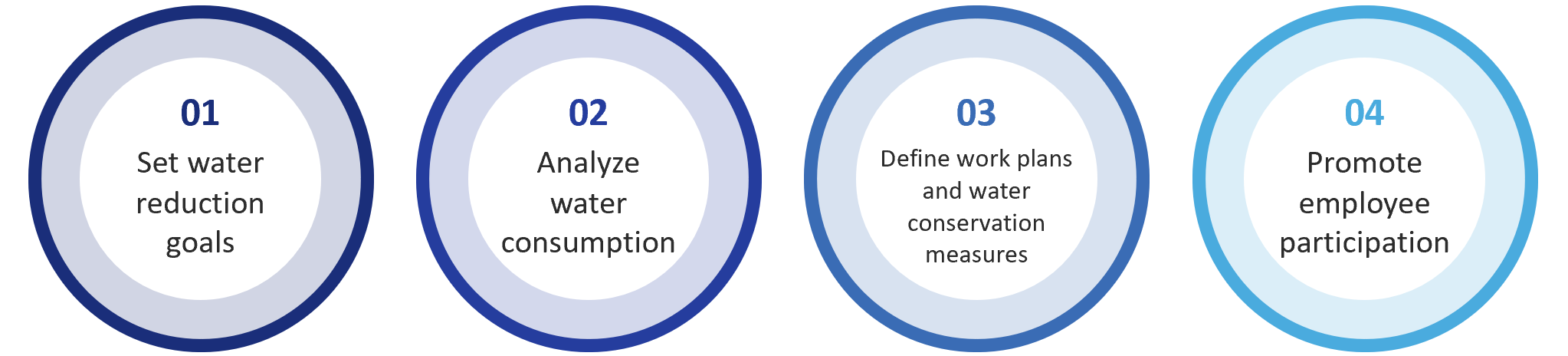
The Company recognizes its organizational role in contributing to and supporting sustainable water resource utilization and aims to support the United Nations' Sustainable Development Goals, particularly the goal concerning water management and sanitation (SDG 6: Clean Water and Sanitation). Therefore, it has systematically managed water usage within the organization, starting with inspecting and evaluating water usage patterns in office areas to identify opportunities for improvement and reduction of unnecessary water consumption.
To enhance water usage efficiency, the Company has implemented appropriate technologies in its office areas, such as the installation of sensor-activated faucets, which help control water volume and reduce wastage from unintentionally leaving taps open. This is coupled with regular inspection and maintenance of the plumbing system to mitigate the risk of water leakage.
Concurrently, the Company emphasizes raising awareness among employees regarding efficient water usage through continuous internal communication and by promoting employee participation in responsible water use in their daily lives. This supports the cost-effective and sustainable utilization of water resources in the long term.
Water — Withdrawal, Discharge & Consumption
Water Withdrawal, Discharge & Consumption
| Metric | Current Year | Previous Year |
|---|---|---|
| Total water withdrawal (Cubic meters) | 1,513.3 | 935 |
| Total water withdrawal by third-party water (Cubic meters) | ||
| Total water withdrawal by surface water (Cubic meters) | ||
| Total water withdrawal by groundwater (Cubic meters) | ||
| Total water withdrawal by seawater (Cubic meters) | ||
| Total water withdrawal by produced water (Cubic meters) | ||
| Percentage of wastewater treated before discharge (%) | ||
| Total water discharge (Cubic meters) | ||
| Total water discharge to third-party water (Cubic meters) | ||
| Total water discharge to surface water (Cubic meters) | ||
| Total water discharge to groundwater (Cubic meters) | ||
| Total water discharge to seawater (Cubic meters) | ||
| Total water consumption (Cubic meters) | 1,513.3 | 935 |
| Recycled water (Cubic meters) |
Water — Targets
Has Set Targets
Yes
Targets
| Target | Base Year | Base Year Value | Target Year | Target Change (%) | Unit |
|---|---|---|---|---|---|
| Reduction of water withdrawal | 2,024 | 935 | 2,029 | 2.5 | Cubic meters |
Water — Performance & Outcomes
Has Performance Results
Yes
Performance Description
Project “Change for Savings”
The Company has implemented a project to replace conventional faucets with water-saving faucets (Low-Flow Faucet) in the restrooms of its leased office building. This has helped reduce water consumption by approximately 30–50% without affecting operational efficiency, marking another significant step in the responsible utilization of resources for a sustainable future.
In 2025, the Company's average water consumption rate was 6.33 cubic meters per person per year, representing a 50% increase from the baseline year. This increase was primarily due to an overflow incident at the underground water storage tank detected early in the year, resulting in higher-than-normal water consumption during that period.
Following the detection of the aforementioned incident, the Company has implemented corrective measures by installing an overflow sensor system to prevent the recurrence of similar incidents in the future and to enhance the efficiency of water control and management within the organization appropriately.
Waste — Plan & Guidelines
Has a Waste Management Plan
Yes
Plan Description
The Company prioritizes the management of waste and refuse generated from its office operations to mitigate environmental and community impacts, as well as to reduce wasteful resource consumption. This is achieved by applying the 4Rs principles: Reduce, Reuse, Recycle, and Replacement, as operational guidelines.
Waste generated from the Company's operations primarily consists of non-hazardous waste from office activities, such as paper, plastic packaging, general daily-use waste, and consumables from work. Therefore, the Company focuses on appropriate management of non-hazardous waste, emphasizing waste reduction at the source, waste segregation, and waste management in a manner that minimizes environmental impact. The Company's waste management is conducted under the constraints of operating in a leased office building. The Company focuses on managing waste in areas directly under its control, while also collaborating with building management to establish appropriate systems for waste segregation and collection, ensuring that generated waste is managed efficiently and in line with environmental guidelines at the operational level. The Company promotes waste reduction at the source by adjusting employee behavior, such as encouraging the use of electronic documents instead of paper, optimizing the use of office supplies, and avoiding unnecessary consumables. This is coupled with public relations efforts and the provision of segregated waste bins in office areas to raise awareness of efficient resource utilization. Furthermore, the Company continuously monitors and evaluates resource consumption and waste management to refine operational guidelines based on the collected data. The aim is to ensure that resource utilization and waste management within the organization are cost-effective, efficient, and support long-term sustainable environmental operations.

Waste — Generation, Disposal & Recycling
Waste Generation, Disposal & Recycling
| Metric | Current Year | Remark |
|---|---|---|
| Total waste generated (Kilograms) | 1,390.15 | Waste volume data collection commenced from May 2025. |
| Non-hazardous waste (Kilograms) | ||
| Non-hazardous waste - Landfilling (Kilograms) | ||
| Non-hazardous waste - Incineration (with energy recovery) (Kilograms) | ||
| Non-hazardous waste - Incineration (without energy recovery) (Kilograms) | ||
| Non-hazardous waste - Other disposal operations (Kilograms) | ||
| Hazardous waste (Kilograms) | ||
| Hazardous waste - Landfilling (Kilograms) | ||
| Hazardous waste - Incineration (with energy recovery) (Kilograms) | ||
| Hazardous waste - Incineration (without energy recovery) (Kilograms) | ||
| Hazardous waste - Other disposal operations (Kilograms) | ||
| Total reused/recycled waste (Kilograms) | ||
| Reused/Recycled non-hazardous waste (Kilograms) | ||
| Reused non-hazardous waste (Kilograms) | ||
| Recycled non-hazardous waste (Kilograms) | ||
| Reused/Recycled hazardous waste (Kilograms) | ||
| Reused hazardous waste (Kilograms) | ||
| Recycled hazardous waste (Kilograms) |
Waste — Targets
Has Set Targets
Yes
Targets
| Waste Type | Disposal Approach | Target | Base Year | Target Year | Target Change (%) | Unit |
|---|---|---|---|---|---|---|
| Non-hazardous waste | 2758 · Description: Reuse · 2759 · Description: Recycle · 2763 · Other name: Reduce usage · Description: Other | Reduce waste volume | 2,025 | 2,029 | 2.5 | Kilograms |
Waste — Performance & Outcomes
Has Performance Results
Yes
Performance Description
Project for Developing an Environmentally Friendly Waste Management System in the Office
The company is implementing a waste management system improvement project to transform waste from a burden into a resource, while promoting sustainable waste segregation within the organization. The main objectives are as follows:
-
Reduce the amount of waste requiring landfill disposal by at least 80%.
-
Send plastic waste into the recycling process.
-
Reduce waste and wastewater disposal costs.
-
Enhance the organization's green image and support the BCG Economy Model.
-
Instill awareness regarding proper waste segregation and management.
-
Support environmentally friendly business operations.
Recycling Project from Recyclable Waste
This project focuses on the proper management of recyclable waste to reintroduce it into new production processes, reduce the use of natural resources, and effectively decrease greenhouse gas (GHG) emissions. The objectives are as follows:
-
Reduce the amount of recyclable waste sent to landfills.
-
Increase the amount of recyclable waste entering the recycling process, especially paper, plastic, aluminum, glass, and metal.
-
Reduce greenhouse gas emissions from improper waste management.
-
Promote a culture of responsible waste segregation and management within the organization.
GHG — Plan & Guidelines
Has a GHG Management Plan
Yes
Plan Description
The Company has established management guidelines to control and reduce the organization's greenhouse gas emissions, aiming to mitigate risks that may arise from environmental impacts and business operations. This includes setting greenhouse gas emission reduction targets based on an assessment of emissions throughout the business value chain, while also considering potential and various measures that can be concretely implemented to reduce emissions. Furthermore, the Company has developed supporting plans and continuously communicates progress in greenhouse gas emission reduction to stakeholders.

GHG — Emissions
GHG Emissions
| Metric | Current Year | Remark |
|---|---|---|
| Total GHG emissions (Metric tonnes of carbon dioxide equivalent) | 162,674.71 | |
| Total greenhouse gas emissions 1 (Metric tonnes of carbon dioxide equivalent) | ||
| Total greenhouse gas emissions 2 (Metric tonnes of carbon dioxide equivalent) | 150,427.58 | Calculated from the company's electricity consumption |
| Total greenhouse gas emissions 3 (Metric tonnes of carbon dioxide equivalent) | 12,247.13 | Calculated from water consumption, waste volume, and paper consumption. |
GHG — Emissions Verification
Emissions Verified by a Third Party
No
GHG — Targets
Has Set GHG Targets
Yes
GHG Targets — Net Zero
Net Zero Targets
| Emission Scope | Base Year | Base Year Emissions | Near-term Target Year | Near-term Target Change (%) | Long-term Target Year | Long-term Target Change (%) | Target Year | Target Change (%) | Unit |
|---|---|---|---|---|---|---|---|---|---|
| 2716 | 2,025 | 162,674.71 | 2,026 | 2.5 | 2,032 | 5 | 2,026 | 2.5 | Metric tonnes of carbon dioxide equivalent |
GHG Targets — Carbon Neutrality
Carbon Neutrality Targets
| Emission Scope | Carbon Neutrality Certified | Base Year | Target Year | Unit |
|---|---|---|---|---|
| 2716 | N | 2,025 | 2,039 | Metric tonnes of carbon dioxide equivalent |
GHG — Performance & Outcomes
Has Performance Results
Yes
Performance Description
1. Energy Saving
Green Hardware for Energy Smart Office Project
The company is implementing a project to transition to an energy-efficient office through the use of high-performance and environmentally friendly IT equipment. The objective is to reduce electricity consumption within the office and decrease indirect greenhouse gas emissions (Scope 2) resulting from daily office equipment usage. The project also promotes environmentally conscious procurement (Green Procurement), extends the lifespan of equipment, and reduces electronic waste (E-waste), aligning with the organization's ESG policy.
2. Use of Clean Energy from Renewable Sources
Green Cloud for Sustainable IT Project
The company aims to reduce energy consumption and greenhouse gas emissions from IT systems by migrating some workloads from on-premise servers to Carbon Neutral certified Cloud services, resulting in
-
Reduce energy consumption of internal server systems
-
Reduce indirect greenhouse gas emissions (Scope 2)
-
Support Green IT initiatives and sustainable development
-
Increase efficiency, flexibility, and modernity of IT systems
3. Development of Low Carbon Products
ORBIT ZERO Project – Reduce Paper, Reduce Carbon, Towards a Carbon-Neutral Organization
The company utilizes the ORBIT application to transform internal paper-based processes, such as timekeeping, leave requests, IT repair notifications, and equipment requisitions, into a fully digital system. The use of the ORBIT app enables the company to
-
Reduce paper consumption
-
Reduce indirect greenhouse gas emissions
-
Support paperless operations (Paperless Office)
-
Laying the Foundation for Green IT for Sustainable Operations
4. Other Projects
Zero Waste Computing Project – Reduce Devices, Increase Efficiency
This project restructures the server system to enhance IT resource utilization efficiency and reduce energy waste. This is achieved by decreasing the number of physical servers and migrating to a virtualization system via Hypervisor, thereby enabling efficient resource consolidation, directly aligning with the organization's environmental policy and the goal of reducing greenhouse gas emissions (Scope 2).
Environmental Legal Incidents
Legal Violation Incidents
| Metric | Current Year | Previous Year | Two Years Ago |
|---|---|---|---|
| Number of cases or incidents of legal violations or negative environmental impact (cases) | 0 | 0 | 0 |
Human Rights Due Diligence
Conducts Human Rights Due Diligence
Yes
Due Diligence Description
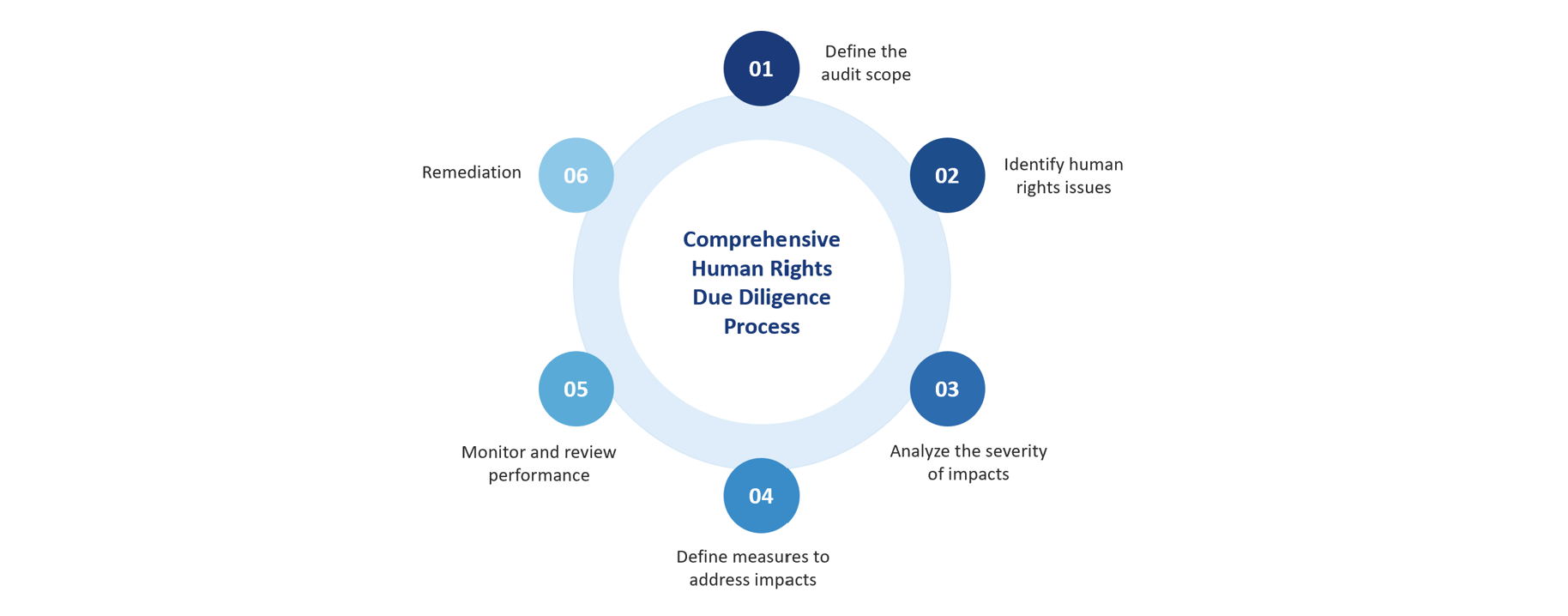
The Company recognizes the importance of human rights in its business operations and has therefore initiated the implementation of a comprehensive Human Rights Due Diligence (HRDD) process to strengthen human rights management in a systematic and holistic manner. The Company has established and communicated its human rights policy and principles through its Human Rights Policy and has implemented a Human Rights Risk Assessment (HRAA) process to identify and assess human rights risks associated with its operations, whether actual or potential. These cover labor rights, customer rights, supplier rights, as well as community and environmental rights.
The Company also integrates the assessment results into its internal management processes in order to develop preventive measures and mitigate human rights risks. In addition, the Company ensures ongoing monitoring and reporting of performance, provides channels for whistleblowing and complaints, and establishes appropriate remediation measures in the event of human rights violations.
Human Rights Due Diligence (HRDD) Process Diagram
Human Rights Risk Issues Related to the Company’s Operations
Labor Rights
Excessive working hours
Discrimination against employees
Sexual harassment
Use of illegal labor
Unsafe working conditions
Customer Rights
Discrimination against customers
Violation of customer privacy rights
Supplier Rights
Discrimination against suppliers
Community and Environmental Rights
Environmental impacts
Risk Heat Map
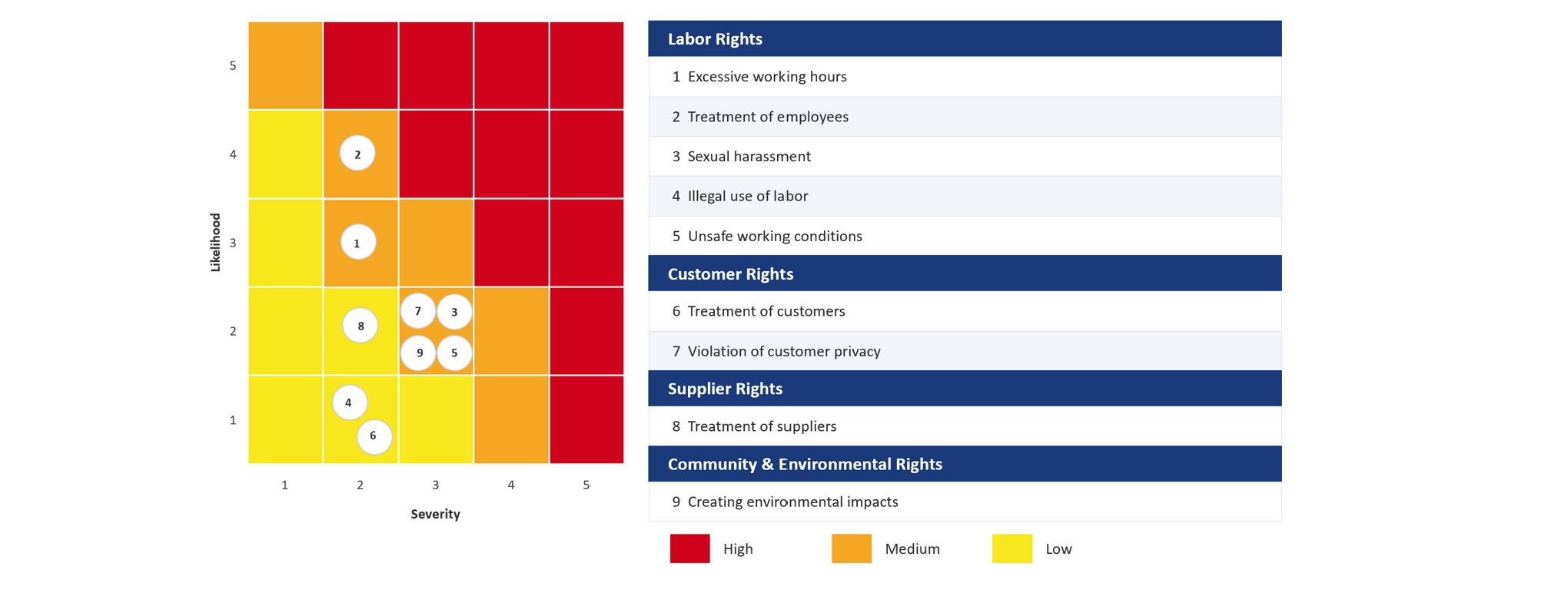
Risk Appetite Determination
The Company has established a Risk Appetite framework to serve as a guideline for enterprise risk management. This framework considers both the impact and likelihood of risks and classifies them into three levels: low, medium, and high. Risks classified as “high” are considered beyond the acceptable level of the organization and therefore require additional mitigation measures or risk management plans to reduce them to an acceptable and controllable level.
Whistleblowing and Complaint Channels, and Handling Procedures
The Company provides whistleblowing and complaint channels to enable employees, shareholders, customers, suppliers, and other stakeholders conducting business with the Company to express opinions or report complaints related to human rights violations associated with the Company. Individuals who become aware of any actions that may constitute human rights violations or misconduct, including illegal or unethical behavior, are encouraged to report such matters. The Company has measures in place to protect whistleblowers and complainants. Regardless of the reporting method, the Company will keep the information of the informant strictly confidential.
Complaint Handling Procedures
The Company has established procedures for handling and considering complaints in accordance with its Whistleblower Policy. When a report is submitted through the designated channels, the recipient will forward the complaint to the Audit Committee. A fact-finding investigation will then be conducted. If the investigation reveals reasonable grounds to believe that the accused has committed the alleged act, the Company will inform the accused of the allegations and provide an opportunity to present evidence or information to prove their innocence.
The management, the Audit Committee, or the Board of Directors will then consider and determine appropriate actions against the offender, mitigate any damages, and ensure fairness to the affected parties. The results of the consideration will be reported to the Audit Committee and the Board of Directors.
Remediation Measures
The Company has established guidelines to provide remedies for individuals who may be affected by human rights issues. Such measures may include apologies, rehabilitation support, monetary and/or non-monetary compensation, and penalties. The Company also ensures continuous follow-up and communication with affected parties until the situation is restored to normal.
In addition, the Company monitors its human rights performance on an ongoing basis and reports the results to management to ensure awareness and to determine appropriate measures to manage any existing or potential impacts. In 2025, no complaints related to human rights violations were reported.
Employees — Plan & Guidelines
Has an Employee Management Plan
Yes
Plan Description
-
Fair Treatment and Compensation of Employees
The Company values its employees as the primary resource driving organizational growth, adhering to the principle of treating all employees equally and fairly, without discrimination based on race, religion, gender, age, education, or any other differences. The Company also prioritizes the safety, health, and well-being of employees throughout the value chain.
The Company strictly adheres to labor laws and relevant regulations regarding appointments, transfers, rewards, and disciplinary actions. It also promotes continuous opportunities for knowledge and skill development to enhance competitiveness and adapt to changes in the labor market.
Compensation and Benefits
-
Salaries and Remuneration: Paid monthly, adjusted annually based on performance, inflation rate, industry comparative data, and employee evaluation results.
-
Promotions: Adjust compensation to be appropriate for increased duties and responsibilities.
-
Additional Benefits: Free lunch, financial support for health activities, group health insurance, annual health check-ups, financial assistance for important occasions, provident fund, stock accumulation program, notebook computers, annual parties, etc.
-
Key Principles: Compensation not less than market rates, adhering to human rights, equality, and transparency, creating incentives and satisfaction to retain high-quality employees sustainably within the organization.
Provident Fund
The Company has established a provident fund to create long-term financial security and quality of life for employees. Additionally, the Company has a policy to contribute to the fund at a rate consistent with employee contributions. The right to receive contributions and accrued benefits will depend on the employee's length of service as stipulated in the regulations. This aims to incentivize and encourage continuous and stable savings among personnel.
Promotion of employment for persons with disabilities
The Company prioritizes improving the quality of life for persons with disabilities by supporting opportunities for employment, showcasing their potential, and fostering self-reliance, thereby strengthening the economic stability of families and society, especially for working-age persons with disabilities. The Company complies with the Persons with Disabilities Empowerment Act B.E. 2550 (2007) and its amendments, through employment under Section 33 and vocational promotion under Section 35.
Employee Welfare Oversight and Development
The Company has established a welfare working group to define, oversee, and develop welfare and quality of life policies for employees appropriately and comprehensively. This group is responsible for listening to suggestions, coordinating, and monitoring welfare operations to comply with laws, best practices, and the Company's business context, in order to sustainably enhance employees' well-being, engagement, and work efficiency.
Equitable and Fair Termination
The Company manages termination cases transparently and fairly, complying with all labor laws, whether termination is due to disciplinary reasons or without fault.
-
There are procedures and processes for considering the payment of severance pay, notice pay, and other legal benefits.
-
To ensure employees receive fair treatment and appropriate care throughout the process.
2025 Results
-
No labor law disputes or child labor cases.
-
Compensation and welfare payments are fair, transparent, and consistent with the "Living Wage" policy, in line with SDG 8.
-
Employee Training and Development
The Company has a policy to promote personnel development, recognizing that human resources are a crucial mechanism for driving the organization to achieve its goals and sustainable growth. Therefore, it focuses on supporting personnel to acquire appropriate knowledge, abilities, and attitudes for work, while adapting to changes in the business environment.
To enhance these capabilities, the Company continuously provides both internal and external training, and supports training funds for employees who wish to improve work-related skills in various areas, categorizing development into 5 main groups as follows:
-
Development of specialized skills aligned with job functions to enhance work efficiency and expertise.
-
Knowledge exchange and dissemination among employees or from external experts to enhance internal organizational learning.
-
Development of language proficiency for effective communication and alignment with international work requirements.
-
Development of leadership and interpersonal skills to enhance team management and collaboration capabilities.
-
Training on necessary legal or international requirements and standards to ensure employees perform their duties correctly.
-
Promoting Employee Relations and Engagement
The Company recognizes that employees are the most valuable resource for driving sustainable business success. Therefore, it emphasizes fostering engagement between employees and the organization, focusing on career development, quality of life, and a suitable working environment. The Company promotes an organizational culture based on cooperation, trust, and participation from employees at all levels, so that employees feel valued and proud to be part of the organization. This includes establishing an open and transparent internal communication system, supporting potential development and career advancement paths, and promoting work-life balance through appropriate activities and benefits such as a provident fund, employee stock accumulation program, and promoting learning through E-Learning.
Furthermore, to foster good relationships among employees and create a friendly and cooperative working environment, the Company organizes annual off-site activities (Outing & Team Building). This allows employees to relax from work and strengthen team relationships, which will positively impact collaboration and enhance team work efficiency.
-
Child Labor
The Company strictly adheres to the labor laws of Thailand and all countries where it operates, strictly prohibiting illegal labor, not employing individuals under 15 years of age, and ensuring that employees under 18 years of age do not work more than 8 hours per day, do not work between 10:00 PM and 6:00 AM, and do not perform work deemed hazardous by law or that could affect their health, physical, mental, moral development, or compulsory education.
-
Occupational Safety and Health
The Company prioritizes creating a safe and hygienic working environment, thus establishing policies that support employees in working safely to protect the health and safety of employees, partners, contractors, and relevant stakeholders. This includes defining an Occupational Health & Safety Policy in compliance with relevant laws and standards, and appointing a Safety Officer (Professional Safety Officer) to oversee, monitor, and drive continuous and effective implementation.
The Company rigorously implements safety and occupational health measures to prevent accidents and reduce potential risks in the workplace. This includes providing protective equipment, conducting training for employees and contractors, and regularly organizing activities that promote the health and quality of life of personnel. Furthermore, annual health check-ups and medical expense benefits are provided to ensure confidence in safe work and a good quality of life.
Plan Areas
| Plan Area | Other — Please Specify |
|---|---|
| Fair employee compensation | |
| Employee training and development | |
| Promoting employee relations and participation | |
| Child labor | |
| Occupational health and safety in workplace | |
| Others | Fair Dismissal |
Employees — Workforce
Workforce Data
| Metric | Current Year | Previous Year | Two Years Ago |
|---|---|---|---|
| Total number of employees (Persons) | 301 | 311 | 236 |
| Number of male employees (Persons) | |||
| Number of female employees (Persons) | |||
| Total employment of disabled persons (people) | |||
| Total disabled employees (people) | |||
| Total male disabled employees (people) | |||
| Total female disabled employees (people) | |||
| Total disabled workers who are non-employee (people) | |||
| Contributions to the fund for promoting and improving the quality of life for disabled persons | |||
| Total number of male employees in operational level (Persons) | |||
| Total number of male employees in management level (Persons) | |||
| Total number of male employees in executive level (Persons) | |||
| Total number of female employees in operational level (Persons) | |||
| Total number of female employees in management level (Persons) | |||
| Total number of female employees in executive level (Persons) |
Employees — Remuneration & Provident Fund
Remuneration & Provident Fund
| Metric | Current Year | Previous Year | Two Years Ago |
|---|---|---|---|
| Total disabled employees (people) | 206,776,827 | 193,139,261 | 137,781,876 |
| Total male employee remuneration (Baht) | |||
| Total female employee remuneration (Baht) | |||
| Number of employees eligible to participate in PVD (persons) | 216 | 222 | 236 |
| Total number of employees joining employee provident fund (Persons) | 111 | 115 | 109 |
| Percentage of total number of employees joining employee provident fund to total number of employees (%) | 36.88 | 36.98 | 46.19 |
| Number of PVD members / Total eligible employees (%) | 51.39 | 51.8 | 46.19 |
| Total amount of provident fund contributed by the Company (Baht) | 5,896,306.34 | 3,801,395.25 | 2,904,418.61 |
| Total amount of provident fund contributed by employee (baht) |
Employees — Training & Development
Training Data
| Metric | Current Year | Previous Year | Two Years Ago |
|---|---|---|---|
| Average employee training hours (Hours / Person / Year) | 76.9 | 24 | 12 |
| Employee development and training expenses (baht) | 1,083,047.05 | 1,913,256.24 | 971,043.88 |
Employees — Occupational Health & Safety
Occupational Health & Safety Data
| Metric | Current Year | Previous Year | Two Years Ago |
|---|---|---|---|
| Total number of lost time injury incidents by employees (Cases) | 0 | 0 | 0 |
Employees — Labour Relations
Labour Relations Data
| Metric | Current Year | Previous Year | Two Years Ago |
|---|---|---|---|
| Proportion of voluntary resignations (%) | 23 | ||
| Total voluntary resignations (Persons) | |||
| Male employees who voluntary resigned (Persons) | |||
| Female employees who voluntary resigned (Persons) | |||
| Percentage of employee turnover leaving the Company voluntarily (%) | |||
| Evaluation result of employee engagement | 1 | 1 | 1 |
Employees — Employee Representation
Employees Are Represented Collectively
Yes
Forms of Representation
| Form | Other — Please Specify |
|---|---|
| Others | Welfare Working Group |
Employees — Targets
Has Set Employee Targets
Yes
Targets
| Indicator | Target Areas | Target Year | Target Year — Description |
|---|---|---|---|
| Average training hours per employee per year | 2984 · Description: Employee training and development | 2,025 | The average training hours per employee are 30 hours per year. |
| Employee Engagement Level | 2985 · Description: Promoting employee relations and participation | 2,025 | Employee engagement level is at 80 percent. |
| No illegal child labor employment | 2987 · Description: Child labor | 2,025 | No illegal child labor employment |
| 1. Total Recordable Injury Rate (TRIR) 2. Occupational Disease Rate (ODR) 3. Lost Time Injury Rate (LTIR) 4. Lost Day Injury Rate (LDIR) 5. Number of Fatal Work-Related Accidents (Fatality) | 2988 · Description: Safety and occupational health at work | 2,025 | 0 |
Employees — Performance & Outcomes
Has Performance Results
Yes
Performance Description
Employee Training in 2025
In the past year, the company implemented skill development and employee training programs in various areas, totaling 182 courses, to enhance potential and readiness for future challenges, averaging 76.90 hours per employee, which is in accordance with the standards set by the Department of Skill Development.
The company also allocates training support funds for employees at all levels, offering opportunities for employees to choose training courses that align with their career paths and interests, to promote the development of essential knowledge and skills for their work and continuously enhance the potential of the organization's personnel.
In addition to professional skill development, the company also emphasizes instilling ethics and transparent operations. It has organized anti-corruption and code of conduct training courses for personnel at all levels as a fundamental course that all employees must attend, with a 100% participation rate of the total number of employees.
The company also participated in the "ESG DNA" project. "Sustainability Knowledge Set for All Personnel" of the Stock Exchange of Thailand via E-Learning system To build a basic understanding of ESG and instilling sustainability concepts in personnel, with 100% of all employees attending mandatory courses.
The company has developed the skills of at least 50 percent of its workforce. of the total number of employees each year, as per the Skill Development Promotion Act B.E. 2545 (2002). specified, to enhance personnel potential and increase long-term competitiveness.
Example Training Courses
All training courses 182 Course | ||
Internal training 35 Course | External training 14 Course | Training via system E-Learning 79 Course |
such as - Product Training - Knowledge about cloud d omputi ng - - - SKY Group Mandatory Courses (comprising Business Ethics, Anti-Corruption, Cyber Security, PDPA) - Unlock work potential with Microsoft 365 - AI 101 (SKY Generative AI) - Safety, Occupational Health, and Working Environment for Employees | such as - HCIA- Strorag e v5.0 - LEAD : Big Data and AI for Sustai n able Future(Lead Batch 2) - Class HCIA Transmission - HCIE-Datacom - Senior Executives in Environmental Economics, Batch 1 | such as - AI for Presentation - Complete Project Management - ESG For sustainable development - Microsoft AI Skills For All - Project management with Ai jl ( Agile Project Management) - Course Basic Cybersecurity - Leadership - Symphia VMS 7.7 Certification Training - Cyber Security Awareness -Planning and Prioritizing |

Promoting employee relations and engagement
Employee engagement survey results
Conducted an Employee Engagement Survey (EES) with the objective of surveying and monitoring the development of employee engagement, as well as understanding opinions on various factors affecting employees' work and quality of life. The data obtained will be used to improve operations, deliver positive employee experiences, and strengthen the organization in the long term. The company aims to maintain employee engagement at no less than 80 percent.
Year 2025 | |
Proportion of employees participating in the employee engagement survey | 65 percent |
Employee engagement score | 93 percent |
Employee turnover rate | 22.79 percent |
Provident Fund
The company established a provident fund to create long-term financial security and quality of life for employees. Additionally, the company has a policy to contribute to the fund at a rate consistent with employee contributions. The right to receive contributions and accrued benefits will depend on the employee's length of service as stipulated in the regulations, aiming to incentivize and encourage continuous and stable savings among personnel.
Currently, the company has joined the SCB Master Fund Provident Fund, managed by SCB Asset Management Co., Ltd., since January 1, 2021. This fund not only serves as a financial guarantee for the future but also helps build confidence and commitment for employees to grow and work with the company in the long term.
Operational results in 2025
Number of employees who are members (persons) | 111 |
Percentage of employees who are eligible to participate in the employee program (%) | 51.39 |
Promotion of employment for persons with disabilities
The company prioritizes enhancing the quality of life for persons with disabilities by supporting employment opportunities, showcasing their potential, and promoting self-reliance to strengthen the economic stability of families. and society, especially persons with disabilities of working age. The company complies with the Persons with Disabilities' Quality of Life Promotion and Development Act B.E. 2550 (2007) and its amendments by employing under Section 33 and promoting careers under Section 35.
In 2025, the company employed and promoted careers for a total of people with disabilities. 3 persons which is fully compliant with legal requirements.
Employee retention
The company is committed to retaining employees and fostering their growth alongside the organization by providing diverse welfare benefits beyond legal requirements to enhance employees' quality of life and work efficiency. These include, for example, the installation of drinking water filters, free lunch for employees, and clean and sufficient restroom facilities, as well as group health insurance, financial assistance for various occasions, sports welfare, lunch welfare, provident fund, and housing loan programs, among others.
Welfare benefits to promote employees' quality of life and livelihood
The company prioritizes promoting the quality of life and well-being of its employees by continuously providing welfare and health programs, such as annual health check-ups, stress counseling by psychologists, medical benefits for employees at all levels, as well as sports facilities and health promotion activities, to support the physical and mental health of employees.
Additionally, the company provides welfare benefits beyond legal requirements to enhance the quality of life and support efficient operations, such as drinking water filters, free lunch for employees, group health insurance, financial assistance for various occasions, a provident fund, a stock accumulation program, and a housing loan program, among others.
Diversity, Inclusion, Non-discrimination, and Gender Equality
The company emphasizes recognizing the diversity and differences among its personnel, adhering to human rights policies and the business ethics handbook for partners as operational guidelines to ensure that employees, partners, and contractors are treated equally and fairly, without discrimination or segregation based on race, nationality, ethnicity, skin color, religion, social status, gender, age, disability, political beliefs, marital status, or any other differences.
Measures to promote safety, occupational health, and working environment
Safety, Occupational Health, and Working Environment Training
Organized training for 30 safety officers at the management level.
Safety training for new employees and general employees
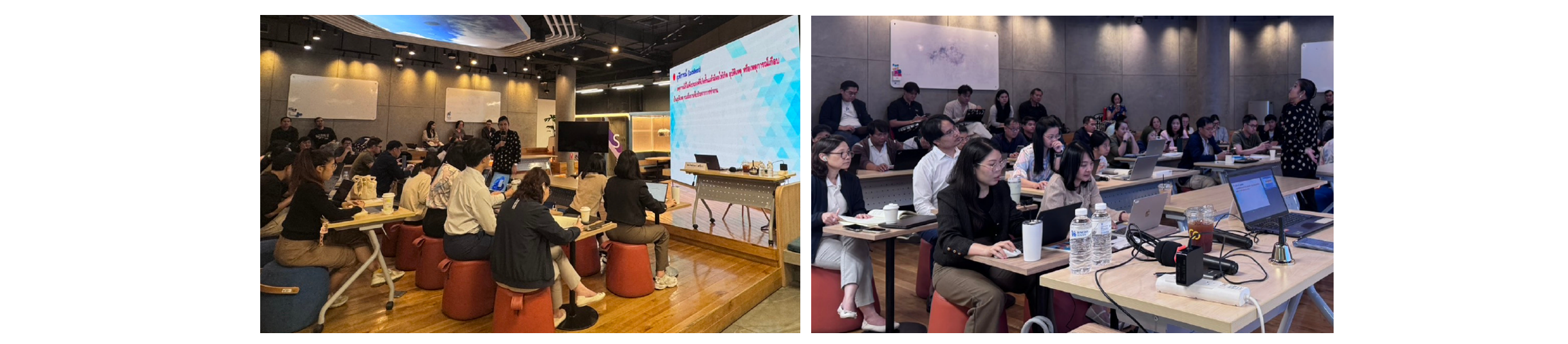
Course details are as follows:
Knowledge of Safety, Occupational Health, and Working Environment
Laws on Safety, Occupational Health, and Working Environment
Regulations on Safety, Occupational Health, and Working Environment
Basic First Aid training course to ensure employees understand basic first aid principles and recognize the importance of proper assistance.
Training Course Details
First aid principles and situation assessment (theoretical part)
Cardiopulmonary Resuscitation (and AED use) (practical part)
Casualty movement (theoretical and practical parts)

Emergency preparedness
The company operates in accordance with the Ministerial Regulation on Standards for Administration, Management, and Operations concerning Safety, Occupational Health, and Working Environment related to Fire Prevention and Suppression B.E. 2555 (2012), with the following actions:
Develop the company's fire prevention and suppression plan
Annual basic firefighting training and fire evacuation drill
Emergency alarm equipment inspection (fire)
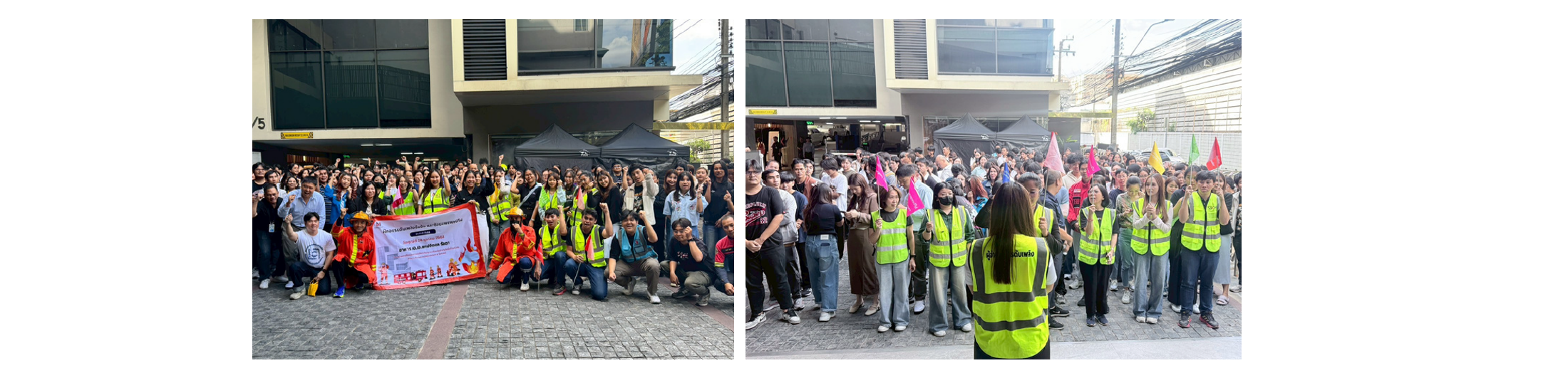
Safety inspection
The company conducts monthly and annual work environment inspections and safety equipment (firefighting) checks to comply with safety laws and regulations.
Details of the inspection include:
Workplace safety inspection (monthly)
Fire extinguishing equipment inspection, Buildings 1 and 2 (monthly)
Fire extinguishing equipment inspection (annual)
Fire extinguisher
Emergency alarm equipment
Electrical equipment inspection
Work environment measurement (lighting)
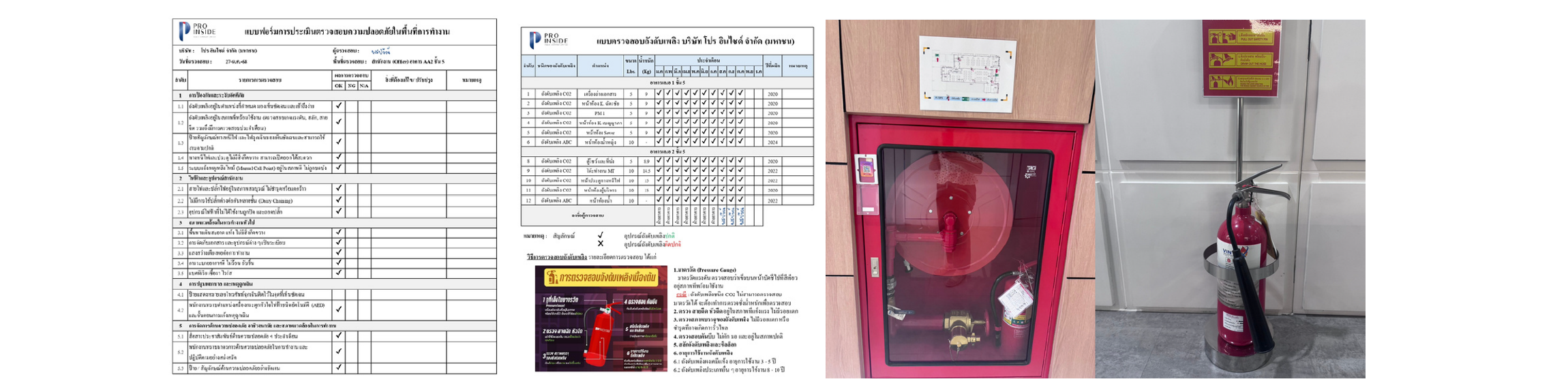
Communicate and publicize safety and health information
The company communicates and publicizes monthly safety and health information through Line OA and internal building media to enhance employee awareness for self-care, reduce accident risks and disease outbreaks, and promote a safe and hygienic working environment.
Health benefits
The company prioritizes the physical and mental health of its employees through comprehensive health benefits and activities to support a good quality of life and work efficiency.
Medical room and medical supply services
The company provides a medical room equipped with medical supplies, medicines, and health consultation services.
Exercise Promotion Project
To promote good health and reduce the risk of non-communicable diseases (NCDs), the company supports 50% of the expenses for participating in sports activities, enabling employees to continuously maintain their health.
ISTRONG Mental Health Project
The company organizes a psychological counseling program for employees experiencing stress, fatigue, or emotional issues, with appropriate guidance provided by psychological experts.
Proactive health screening and disease prevention
The company provides annual health check-ups, influenza vaccinations, cervical cancer screenings, lectures on NCDs, and mobile dental services to ensure employees receive comprehensive care.
Measures for controlling and preventing the spread of infectious diseases
The company regularly disinfects its office buildings and provides alcohol gel and liquid soap dispensers for handwashing throughout the workplace, as well as publicizes knowledge on disease prevention, to ensure employees are aware and can properly care for themselves.
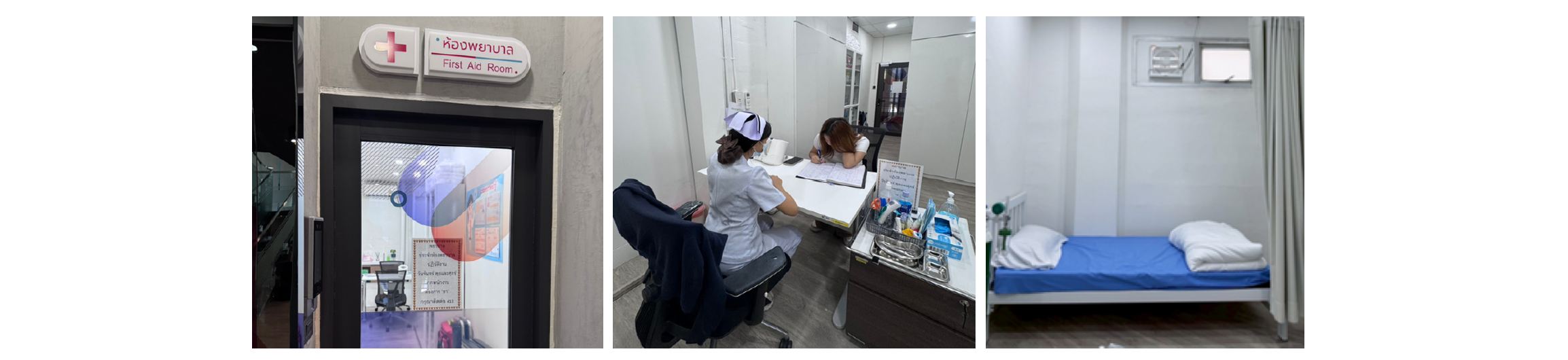
Results for 2025
No labor legal disputes or child labor cases
Compensation and welfare payments are fair, transparent, and consistent with the "Living Wage" policy, in line with SDG 8.
Safety inspection and certification items
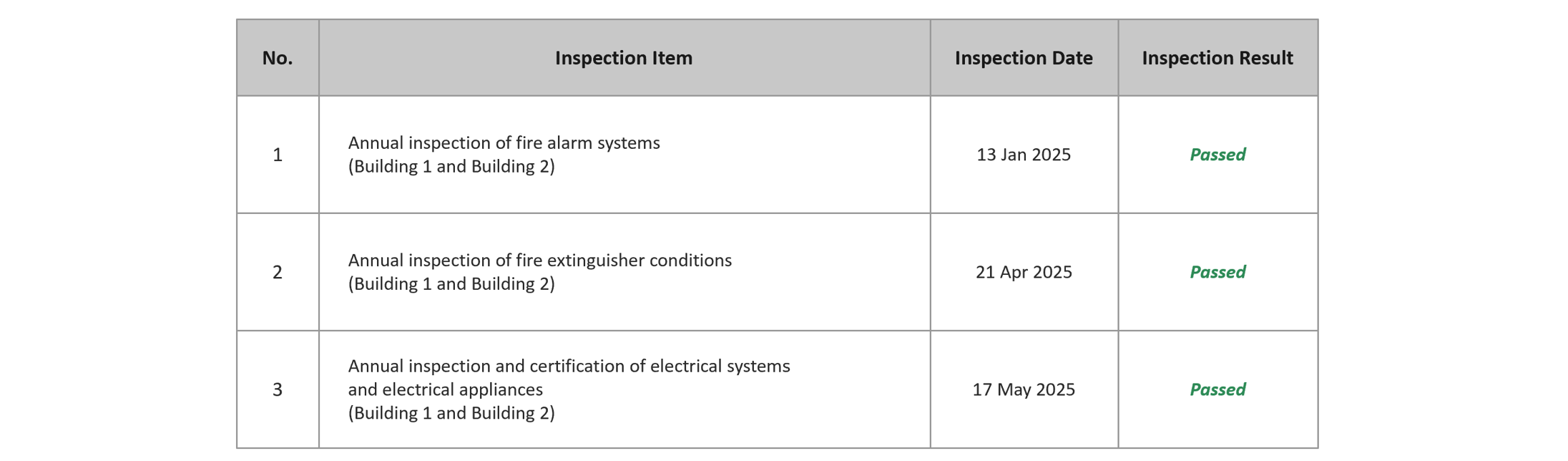
Accident statistics/Absenteeism rate/Illness rate resulting from work
Indicators
Year 206 8
Total Recordable Injury Rate (TRIR)
0
Occupational Disease Rate (ODR)
0
Lost Time Injury Rate (LTIR)
0
Lost Day Injury Rate (LDIR)
0
Number of serious work-related accidents resulting in fatalities (Fatality)
0
Workplace Lighting Assessment Results for 2025
The Company conducted lighting intensity measurements across a total of 50 workstations. The results indicated that 49 locations (work desks) met the required standards, while 1 location (Meeting Room 1) did not meet the criteria. For the non-compliant area, the Company has notified the building management team to implement corrective actions, including replacing lighting fixtures and increasing illumination levels to meet the required standards. Follow-up actions and re-assessment are scheduled for 2026.
Customers — Plan & Guidelines
Has a Customer Management Plan
Yes
Plan Description
-
Responsibility towards Customers.
The company is committed to building customer satisfaction and trust by prioritizing quality service, attentive care, and responsible business operations towards customers. The company has established the following policy guidelines for customer treatment:
-
Deliver quality products and services that meet or exceed customer expectations, at appropriate and fair prices.
-
Strictly adhere to the terms and agreements with customers to maintain good and sustainable relationships with them.
-
Provide accurate, sufficient, and up-to-date information regarding products and services, including information technology data, to customers without exaggeration or causing customers to misunderstand the quality of products and services.
-
Maintain customer confidentiality and not use customer information for one's own benefit or that of related parties improperly.
-
Delivery of Quality and Fair Products and Services.
The company is committed to delivering quality information technology solutions and services that comply with the scope of work, technical specifications, and Service Level Agreements (SLA). It adheres to principles of transparency, fair pricing, and efficient project management throughout the operational lifecycle, from design, development, installation, testing, to post-delivery services. The company emphasizes clear communication, risk management, and quality assurance to ensure that operations not only meet contractual obligations but also create value and positive impacts for customer organizations and society in the long term.
Communication of information regarding the impact of products and services to customers.
The Company prioritizes complete, accurate, and transparent communication of product and service information by preparing documents and promotional materials that specify important details such as technical specifications, Service Level Agreement (SLA) documents, user manuals, and safety documents, to enable customers to make informed decisions based on factual information.
The Company has established a Business Code of Conduct that sets clear guidelines for customer communication and information provision, prohibiting distortion, exaggeration, or concealment of important information about products and services. It also requires all employees to adhere to providing factual, complete, and accurate information regarding the true characteristics of products and services, to build trust, satisfaction, and maintain long-term sustainable relationships with customers.
-
Development of Customer Satisfaction and Relationship Building.
The company emphasizes the continuous development of processes for system, software, and service development to meet customer expectations and needs. It strives to achieve maximum customer satisfaction by listening to customer feedback and suggestions. Prompt and efficient response is crucial for creating sustainability in service delivery, fostering lasting and transparent relationships, which in turn strengthens trust in the organization and makes customers feel part of a shared sustainable development.
3. Protection of customer personal data.
The Company recognizes the importance of personal data protection and adheres to the Personal Data Protection Act B.E. 2562 (2019) (PDPA) as its operational framework to build trust and transparency in the collection, use, and disclosure of personal data of employees, customers, partners, and all stakeholders. The Company has established a Privacy Policy that covers key principles, including necessary data collection, lawful data usage, data security, and data disclosure with explicit consent from the data subject.
-
Product Development, Quality Improvement, and Safety.
The company recognizes the importance of developing quality and safe products and services that appropriately meet customer needs. It is committed to operating a comprehensive ICT Solution business based on international standards for quality, safety, and project management, to ensure customers receive reliable and efficient services. Furthermore, the company prioritizes Cyber Security in the design and development of various solutions to protect customer data, information systems, and technology infrastructure, reduce risks from cyber threats, and support secure digital system usage. The company emphasizes selecting quality products that are certified according to relevant standards and considers environmental friendliness. It also provides After-Sales Service to ensure continuous customer care, building confidence that the products and services received are of high quality, safe, and can effectively support customers' long-term business operations.
Plan Areas
| Plan Area |
|---|
| Responsible production and services for customers |
| Communication of product and service impacts to customers/consumers |
| Development of customer satisfaction and customer relationship |
| Protection of customer personal information |
Customers — Satisfaction Results
Customer Satisfaction Results
| Metric | Current Year | Previous Year | Two Years Ago |
|---|---|---|---|
| Evaluation results of customer satisfaction | 1 | 1 | 1 |
Customers — Targets
Has Set Customer Targets
Yes
Targets
| Indicator | Target Areas | Target Year | Target Year — Description |
|---|---|---|---|
| Complaint regarding exaggerated statements | 3007 · Description: Responsible production and services for customers | 2,025 | 0 cases |
| Customer Satisfaction Level | 3009 · Description: Development of customer satisfaction and customer relationship | 2,025 | Not less than 80 percent |
Customers — Performance & Outcomes
Has Performance Results
Yes
Performance Description
Performance and Outcomes in Customer Management
In the past year, the Company has systematically focused on customer relationship management, covering everything from needs analysis, project planning and management, system development and delivery, to post-delivery services. The emphasis has been on delivering high-quality, stable solutions that align with the objectives of each customer project.
The Company has continuously developed its project management and customer service processes, including defining clear work plans and timelines, tracking project progress and managing risks, close coordination with customers, and systematic handling of complaints and technical issue resolution, to effectively and promptly meet customer needs.
Furthermore, customer data and feedback are analyzed and used to improve work processes, develop products and services, and elevate service standards to build trust, confidence, and strong long-term relationships with customers.
Customer Relationship Management
The Company prioritizes building and maintaining sustainable relationships with customers by designing comprehensive customer experiences that meet the specific needs of each client, from needs analysis, solution design, project management, and delivery, to after-sales service. This approach ensures alignment with each customer's business context and specific requirements, aiming to foster maximum trust and satisfaction, and to establish sustainable business partnerships.
The primary objectives of studying and evaluating customer satisfaction are as follows:
-
Assess customer satisfaction – to understand the level of satisfaction with products and services received.
-
Identify problems or deficiencies – to find areas requiring improvement or development in services and products.
-
Enhance service efficiency – to improve the quality of products and services to meet customer needs and create maximum satisfaction.
-
Build loyalty and long-term relationships – High satisfaction helps build trust, encouraging customers to return for repeat services and supporting the Company's sustainable growth.
-
Create a database for continuous development – Evaluation data helps in planning marketing strategies, developing products, and designing services that respond to future trends and needs.
With this approach, the Company can create valuable customer experiences, build brand trust, and foster long-term relationships, leading to a competitive advantage while enhancing sustainability for the organization and all stakeholders.
Promoting and Supporting Partner Sustainability Development
The Company focuses on operations that promote the development of partner potential through the following partner potential development guidelines:
-
Establishing business planning with partners involves collaboration between the Company and its partners to develop business operations, whether through new projects or various forms of cooperation that can simultaneously enhance the sustainability performance of both the Company and its partners.
-
ESG partner evaluation by the procurement department to review performance according to the Company's requirements.
-
Building long-term relationships with partners: The Company has fostered strong long-term relationships with partners through environmentally friendly procurement processes, such as purchasing Green Paper A4.
Customer Satisfaction Survey Results
The Company regularly conducts customer satisfaction surveys to evaluate the quality of its project management and information technology system development services, as well as to gather feedback and suggestions from customers, in order to improve and enhance operational efficiency.
The latest survey results indicate a high overall level of customer satisfaction. Most customers value the team's expertise in project management, the ability to execute within defined scope and timelines, and the promptness in coordination and technical consultation that appropriately addresses customer needs. The Company will utilize these survey results to continuously improve service quality and project management processes, thereby enhancing customer experience and trust in the long term.
|
|
Objectives |
Performance Results |
|
Customer Satisfaction Level |
Not less than 80 percent |
95.36 percent |
Development and Improvement of Service Quality
The Company collects and analyzes complaint data to identify the root causes of problems and develop preventive measures to avoid recurrence, as well as continuously improving work processes and product/service quality. This is to ensure customers receive a positive experience and to foster sustainable relationships between the Company and its customers.
|
Order |
Topics of Dissatisfaction |
Causes |
Improvement Plan |
|
1 |
Inappropriate dress during work. |
Employees dressed inappropriately during work. |
Establish clear and appropriate dress code guidelines for work to enhance a professional image, along with specifying penalties for non-compliance. |
|
2 |
Speed in preparing and submitting quotations. |
The quotation review and approval process involves multiple steps. |
The Company has streamlined the quotation preparation and approval process and established guidelines for status tracking to increase the speed and efficiency of service delivery. |
|
3 |
Inconvenience in contacting staff. |
Communication channels at certain times do not cover customer needs. |
The Company has expanded and developed communication channels between customers, staff, and coordinators to facilitate and enhance communication continuity. |
|
4 |
Delayed response speed for information regarding pricing and project details. |
Delayed information provision. |
The Company has improved internal coordination guidelines and established communication channels for urgent cases to provide information and updates to customers promptly and appropriately. |
Protection of Customer Personal Data
The Company has technological and management measures in place to prevent data leakage or unauthorized access, and continuously provides PDPA training to employees to foster understanding and awareness of their responsibilities in complying with the law correctly. The Company pledges not to use personal data for personal gain or for the undue benefit of third parties, and will operate with transparency, ethics, and strict regard for the privacy rights of all parties.
Notably, in 2025, there were no cases where the Company received complaints regarding customer personal data.
Product Development, Quality Improvement, and Safety
The Company meticulously defines measures for inspecting and testing products, as well as the installation and maintenance processes of information technology systems, including hardware. and Software. by selecting products from manufacturers with reliable certification standards, such as Huawei, HikVision, Dahua, Fortinet, Oracle, and SAP. and undergoes rigorous quality assessment. Furthermore, the Company has a team of experts providing consultation and system design planning that primarily considers user safety, ensuring that products and services are efficient, safe, and compliant with standards.
The Company prioritizes the continuous development of products and services, focusing on maintaining international quality standards, as evidenced by its ISO9001 and ISO27001 certifications. which serves as a guarantee of quality and reliability in business operations. Furthermore, the Company emphasizes the development of products and services that are safe for the health and hygiene of customers and consumers, as well as considering user safety and compliance with environmental standards.
Community & Social — Plan & Guidelines
Has a Community & Social Plan
Yes
Plan Description
-
Employment and vocational skill development.
Develop and enhance employment opportunities in various areas through project implementation, which helps reduce migration and unemployment rates in the area, increases consumption rates, and distributes career and income opportunities to local communities, enabling them to be self-reliant sustainably.
-
Promote access to technology for society.
The company operates projects related to enhancing and developing the quality of life for people in society through information technology and digital services, as follows:
Information Technology System Installation Project, High-Speed Internet Service Center Project in Remote Areas.
The company, in collaboration with the NBTC, operates the USO Net project. To provide high-speed internet services in remote areas through 5 types, including Wi-Fi. village public. , Public Internet Centers, Public Internet Room (USO Wrap), Internet for schools and Internet for Sub-district Health Promoting Hospitals (Tambon Health Promoting Hospitals).
Objective: Reduce the digital technology access gap, enhance learning opportunities and digital skill development, and support sustainable community development.
Expected benefits:
-
Increase internet access and digital literacy, helping people in remote areas and underprivileged groups use technology to improve their quality of life and careers.
-
Support sustainable development by integrating cooperation between public, private, and community sectors, reducing inequality, and enhancing the nation's competitiveness.
-
through accessible and secure technology.
Promote the use of technology to genuinely improve the quality of life for Thai people.
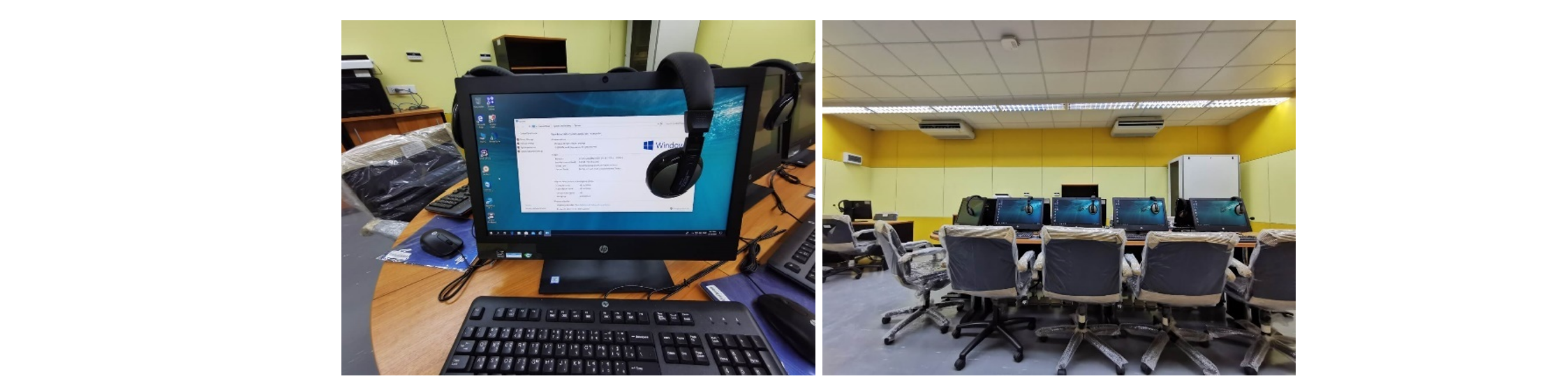
CCTV System Installation Project in Communities and Public Areas.
The company operates several projects for the installation and maintenance of Closed-Circuit Television (CCTV) systems in community and public areas, such as:
-
CCTV System Interconnection Maintenance Project (to enhance safety in high-risk areas and communities within the Bangkok metropolitan area).
-
CCTV System Procurement Project (with equipment and installation in Songkhla Province).
-
CCTV Procurement and Installation Project (around the green bicycle bridge connecting Lumphini Park – Benjakitti Park and surrounding areas).
Objective: Increase safety in public areas, reduce the risk of crime, and support efficient monitoring and management of emergency incidents.
Expected benefits:
-
Enhance the safety of people and property.
-
Reduce the risk of crime in community and public areas.
-
Support officials in continuously and systematically monitoring, observing, and tracking incidents.
-
Can link and analyze incidents in each area to support investigation, tracking, and apprehension of offenders.
In line with Smart City guidelines and SDG 11: Sustainable Cities and Communities, developing safe and sustainable cities.

Central Cloud System Procurement Project to promote learning, helping to increase equal access to knowledge sources and educational information, supporting lifelong learning, and building a sustainable technology foundation for education.
The company established a central public health cloud system to support the integration of health data from agencies within the Ministry of Public Health. The public can access personal health data quickly, securely, and accurately. Public health agencies and hospitals can manage data through the cloud system securely, with standards, and elevate national health data management.
Expected benefits:
-
The public can access their personal health information quickly, securely, and accurately, in accordance with the data owner's rights.
-
Elevate national health data management standards.
-
Hospitals can manage health data securely, stably, and with standards through a cloud system.
Equipment lease and service contracts for the sustainable development project of the community digital center ecosystem.
The company operates equipment lease and service contracts for the establishment of "Public Internet Service Centers (Community Digital Centers)" totaling 1,722 centers nationwide, to support access to basic telecommunications and social services, reduce inequality, increase access to the internet and digital technology, and promote learning and vocational skill development in communities.
-
People in remote areas, low-income individuals, children, the elderly, people with disabilities, and the underprivileged can access technology and the internet equally.
-
Enhance digital skills for people in the community through center staff who provide advice.
Promote lifelong learning and develop the vocational potential of the public through technology.
Plan Areas
| Plan Area | Other — Please Specify |
|---|---|
| Employment and professional skill development | |
| Education | |
| Disadvantaged and vulnerable groups | |
| Reducing inequality and promoting social equality | |
| Others | Promote access to technology for society |
Community & Social — Targets
Has Set Community & Social Targets
Yes
Targets
| Indicator | Target Areas | Target Year | Target Year — Description |
|---|---|---|---|
| Community complaints | 3045 · Other name: Complaints Management · Description: Others | 2,025 | Number of complaints from the community is zero. |
Community & Social — Performance & Outcomes
Has Performance Results
Yes
Performance Description
Community and Social Activities.
The company is committed to supporting community development and building a sustainable society through various social activities, as follows:
"Share for Change" activity on World Ozone Day 2025, by sharing good-condition items to become scholarships for underprivileged youth through the "Pan Gun Shop" project of the Yuwaphat Foundation.

Blood donation activity in collaboration with the National Blood Centre, Thai Red Cross Society, helps patients in need of blood receive assistance.
Activity to collect old calendars for donation to the Education Technology Center for the Blind, to be converted into Braille media, helping visually impaired individuals access learning and develop their potential.
Activity to collect donated items to assist those affected by floods in Songkhla Province.
Overview of the company's donations and social assistance.
Contributed 50,000 Baht to the Science and Technology Development Promotion Project.
Contributed funds to the Thai Rak Pa Foundation, a foundation for sustainable forest conservation, amounting to 10,000 Baht.
Supported the organization of a charity boxing match to purchase medical equipment for Kanchanadit Hospital, amounting to 100,000 Baht.
Contributed funds to the Medical Governance Foundation for organizing the "Specialized Volunteer Medical Unit for Royal Commemoration" project at Chaophraya Yommarat Hospital, amounting to 100,000 Baht.
Provided food and beverage products to temporary shelters during the clashes in the Thai-Cambodian border area, valued at 170,000 Baht.
Law Violation Incidents
Law Violation Incidents
| Metric | Current Year | Previous Year | Two Years Ago |
|---|---|---|---|
| The total number of cases or incidents of significant violations of laws or regulations regarding social and human rights (Cases) | 0 | 0 | 0 |
| The total number of cases or incidents that cause significant labor disputes (Cases) | 0 | 0 | 0 |
| The total number of cases or complaints related to consumer rights violations (Cases) | 0 | 0 | 0 |
| The total number of cases or complaints related to partner rights violations (Cases) | 0 | 0 | 0 |
| The total number of cases or incidents that cause disputes with the community/society (Cases) | 0 | 0 | 0 |
| The total number of cases or incidents related to cyber security or customer data breaches (Cases) | 0 | 0 | 0 |
| The total number of cases or incidents related to safety and occupational health at work (Cases) | 0 | 0 | 0 |